

At a time when Russian missiles and drones are hammering Kiev and cities in western Ukraine as well, with Ukrainian air defense being extremely vulnerable since there are no more Patriots left — a report by the Washington Post states that only 2 Patriots remain — Trump turns his gaze toward Putin and the agreement for the supply of Russian diesel, arguing that the Russian president is the one interested in peace... Should Trump persist in this policy line regarding Zelensky, it will constitute a massive turnaround in the Ukrainian crisis that will also dramatically impact developments on the battlefield…
Crisis
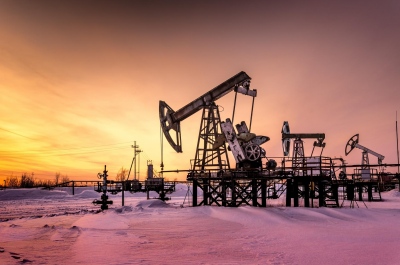
The most serious crisis in US-Ukraine relations since the acrimonious meeting in the Oval Office last year is escalating further due to a dispute over who ordered the shutdown of a critical Ukrainian military system relying on Elon Musk's Starlink satellite internet service. At the same time, President Volodymyr Zelensky warns that he will resume attacks against Russian oil refineries, which President Donald Trump insists are worsening the already high prices of diesel and gasoline ahead of the US midterm elections. In fact, after describing the resumption of Ukrainian attacks against Russian oil refineries as "outrageous," Trump expressed certainty that the conflict in Ukraine will be resolved, emphasizing that "this will happen without Zelensky."
Hard reality
The new rift reflects a harsh reality for Ukraine, which is fighting for its survival: Trump's effort to curb the politically disastrous energy costs of his own war in Iran makes it harder and more dangerous for Ukraine to win its own war. Trump launched a scathing attack against the Ukrainian leader in an interview with Newsmax on Thursday. "I'm not particularly a fan of Zelensky. They have destroyed this country," he stated, apparently placing the blame for the devastating consequences of the war on a nation defending itself against the Russians. "I find it harder to deal with Zelensky than with Putin."
Not the first time
This is not the first time Zelensky and Ukraine have come into conflict with Trump ahead of US elections. In a 2019 phone call, the US president used the prospect of providing military aid to try to pressure Zelensky to launch an investigation into Joe Biden and his son, Hunter. This move led to Trump's first impeachment inquiry. Ukraine's renewed involvement in US domestic politics intensifies concerns in Washington and Europe that the president is not only prioritizing his personal political needs, but is now also taking a series of actions that actively aid Putin.
Chronicle of the conflict
The latest crisis between Washington and Kiev began when Trump announced last Friday a sanctions-evading deal to purchase diesel from Russia. Subsequently, the Trump administration warned Ukraine over the weekend that the US could cut off intelligence sharing regarding its military operations and block European purchases of American weapons if it did not halt long-range strikes against Russian refineries. Amid intense backlash, even from many Republicans, Trump announced a ceasefire between Russia and Ukraine regarding energy infrastructure. However, he later hinted that he had not given prior notice to the two warring parties, who appeared caught by surprise.
New strikes
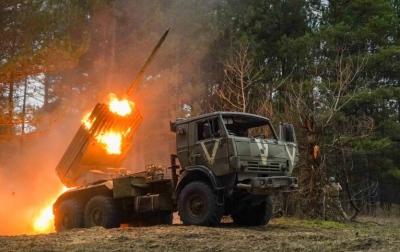
Ukraine observed this so-called ceasefire, but Russia launched devastating airstrikes and drone attacks against its energy infrastructure, leaving 600,000 people without electricity. On Tuesday, Zelensky stated that his government had not received the usual timely warning from the US prior to a Russian ballistic missile strike that hit a major power plant in Kiev and caused damage to a residential building.
Zelensky on the counteroffensive
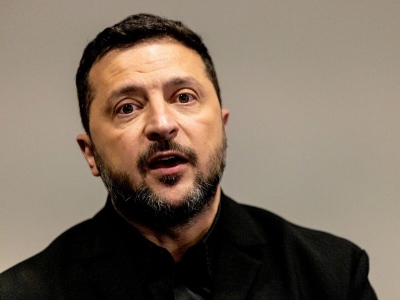
Following these developments, Zelensky announced the resumption of attacks against Russian energy facilities. "Enough is enough," he stated in an interview with the Financial Times. Zelensky accused the US of considering entering into more deals with Putin, potentially regarding natural gas as well, which he assessed would not be popular in America. "Everyone will want to ask how it is possible that while some people are trying to survive, fighting and dying, you are doing... business with people who exhibit such aggression," he told the FT.
The role of Elon Musk
The turbulence surrounding the SpaceX Starshield system, a military-grade version of Musk's Starlink service, did not merely sharply escalate tension in Washington and Kiev. It raised new questions regarding the global role and influence of the world's richest person, whose technologies have become indispensable in the new era of warfare. Ukrainian generals were caught off guard by restrictions imposed on the Starshield system, which is owned and controlled not by Musk, but by the US government. These restrictions effectively capped the speed of Ukrainian military equipment, including drones, and reduced the armed forces' ability to communicate and operate combat aircraft and helicopters. These limitations provided a significant military advantage to Russian forces on the battlefield.
Uncertainty in Washington
In Washington, growing uncertainty prevails regarding what triggered the slowdown. Musk stated in a post on the X platform on Wednesday that "any restrictions on speed or usage are decided by the US military and, ultimately, the US President." However, two high-ranking American officials stated that the order to restrict Starshield did not come from Trump. Certain officials are increasingly convinced that Musk bears a large share of the responsibility. Reuters reported late Thursday that the order to restrict the satellite system originated from within the White House, citing two American officials and one Western official briefed on the matter.
Restrictions were deliberate
Zelensky has no doubt that the restrictions were deliberate. "It was not a technical problem," he told the Financial Times. A Ukrainian military source told the newspaper that the full functionality of the system has now been restored and speed limits have been lifted.
Disappointment
The Starshield episode followed recent moves and statements by Trump that have caused disappointment among US allies, who believe the only path to ending the war is exerting pressure on Putin. Trump's critics in the US argue that the diesel deal represents merely the latest example of his habit of appeasing Putin, assessing it will do little to lower prices prior to the midterms. However, if fully implemented, the agreement will funnel billions of dollars into the Russian economy after years of international sanctions, and these funds will likely be used to bolster the Russian war machine.
Trump desperate
"Trump is desperate to do whatever he can to improve his own political standing and the standing of Republicans defending Senate seats in these midterm elections," Democratic Senator Chris Coons of Delaware stated Wednesday on CNN News Central. From a strategic standpoint, the diesel deal is particularly baffling since — according to American reports — Russia had provided Iran with information regarding the positions of US ships, aircraft, and military personnel during an earlier phase of the war. The American administration maintains that the president continues to seek opportunities to achieve peace. "I believe, in fact, that Putin wants to make a deal more than Zelensky," Trump stated.
Agreement difficult
However, since Trump's return to power last year, there has been no indication that Putin has moderated his position, according to which Ukraine must cede critical territory in the east of the country that Kremlin forces have failed to capture, in exchange for ending the war. This is a deal Zelensky could never accept: it would dishonor the memory of Ukrainians killed in the war and allow Russia to establish a bridgehead for a future invasion. There is, however, an alternative interpretation of this latest, crude application of Trump's America First policy. "Donald Trump is putting his electoral standing above the security, safety, and lives of Ukrainian citizens. And that is something that should not escape the attention of viewers or policymakers on both sides of the Atlantic," argued Tom Keatinge, director of the Centre for Financial Crime and Security Studies at the Royal United Services Institute in London.
Ukraine runs out of Patriot missiles
And while the Trump-Zelensky rift hits a boiling point, news for Kiev is genuinely grim. Ukraine has exhausted its stockpiles of missiles for the US-made Patriot air defense system, rendering it even more vulnerable to Russian ballistic missile strikes. For months, Zelensky has repeatedly warned that Ukraine is running out of American Patriot interceptor missiles, which rank among the few defensive weapons capable of shooting down ballistic missiles. However, interceptor missiles are exceptionally expensive and face severe global shortages as other countries have consumed much of their stockpiles or seek to reinforce their own defense systems amid the war in Iran. "Almost all ballistic missiles from Russia's latest strike went unintercepted due to a shortage of interceptor missiles," CNN reported, citing a source with knowledge of the events.
Firing the last ones...
During the strike on the night from Tuesday to Wednesday, Russian ballistic missiles hit three power plants in Kiev, while energy infrastructure in Kharkiv was also targeted. The Ukrainian Air Force had previously announced intercepting four Russian ballistic missiles while repelling the specific attack, suggesting it may have utilized its remaining Patriot missiles. This is not believed to be the first time Ukraine has completely exhausted its Patriot interceptor stockpiles. In mid-August, CNN carried news citing Ukrainian officials that Ukraine had run out of interceptor missiles. Zelensky told CNN in August that he spends his days making "millions" of phone calls to allies trying to secure deals for more Patriot missiles. At that time, he stated Ukraine possessed barely a tenth of the interceptor missiles it urgently required.
The promise
A month later, the Ukrainian president appeared more optimistic, claiming the country "will receive permission to manufacture Patriot missiles" from the United States. However, US President Donald Trump ultimately avoided clarifying whether he had agreed to such a thing, and the authorization was never issued. Zelensky told the Financial Times in a particularly sharp interview that he could agree to halt attacks against Russia's energy facilities only if he received, "at a minimum," more Patriot interceptors. He added that "when he asked for more air defense systems, the American response was to weaken the Starlink service." In a public statement on Wednesday, he renewed his appeal for more missile stockpiles, stating: "The American president possesses all effective and necessary means to bring peace closer through strength, justice, and pressure on the aggressor. We are requesting additional Patriot interceptor missile packages for Ukraine."
www.bankingnews.gr







Σχόλια αναγνωστών